Reliable pest control services Salmon property owners depend on require durable barrier methods adapted to extreme continental temperature swings and river-valley pest pressures. Structural sealing and targeted insect management protect homes from the Salmon River corridor up through mountain acreage.
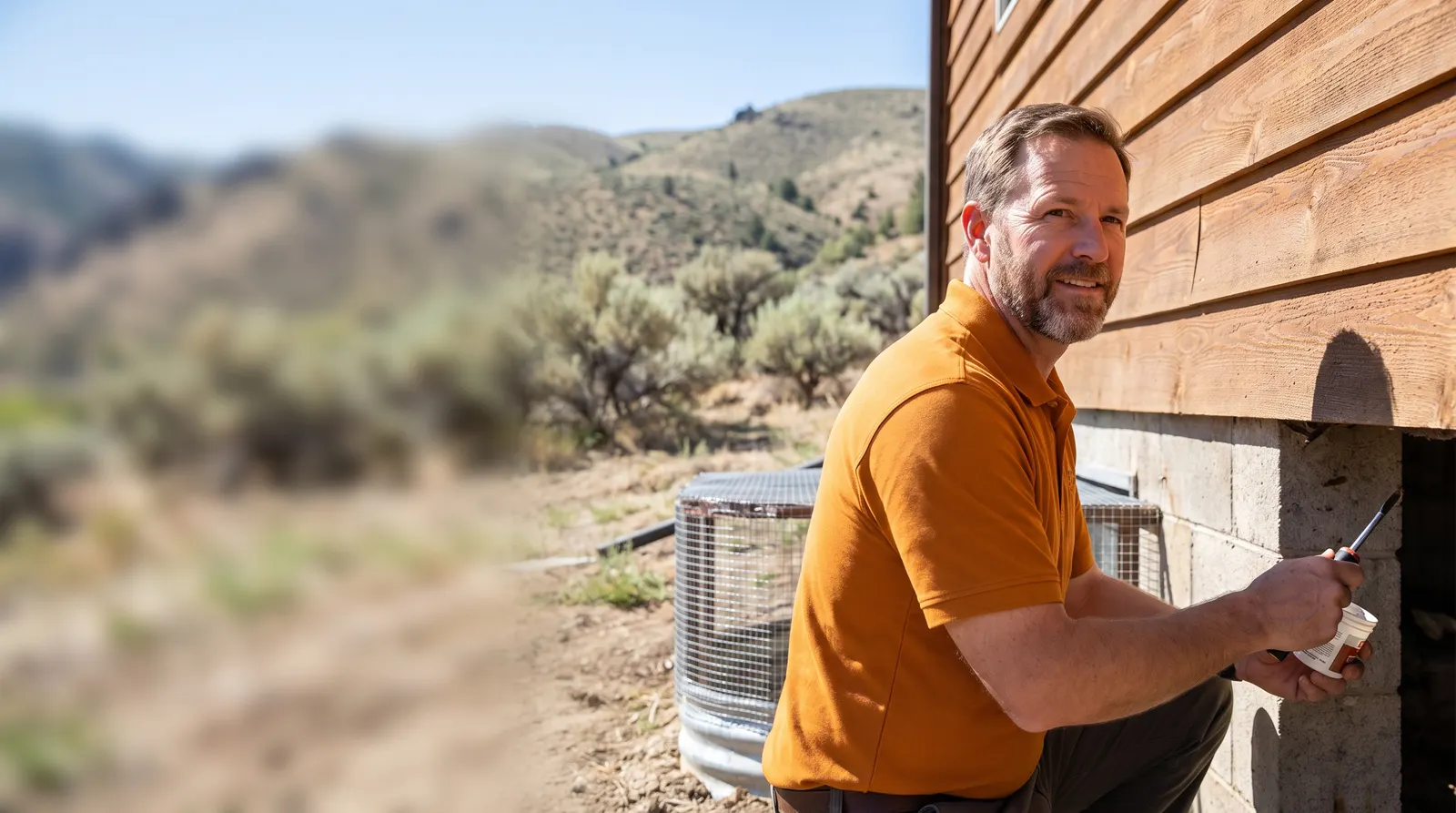
Pest control services company in Salmon is a specialized environmental management and structural exclusion provider that eliminates insect and vertebrate infestations from residential, agricultural, and commercial buildings across Lemhi County.
Every service reflects the same meticulous attention to detail, whether it's a single job or a larger pest control services project across Salmon.
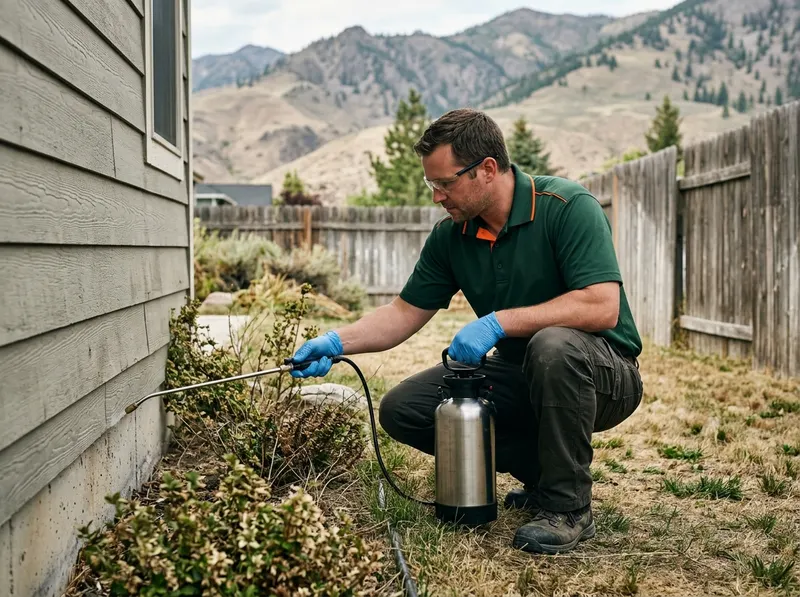
Residential pest control services provide continuous defense for single-family homes, log cabins, and rural outbuildings throughout Salmon. The process begins with an on-site structural audit of foundation footings, rim joists, soffits, and utility penetrations where temperature differentials attract pests. Treatments integrate low-toxicity interior localized placements with an exterior micro-encapsulated liquid barrier applied 3 feet up the foundation wall and 3 feet outward onto the soil. This prevents migrating earwigs, boxelder bugs, and ground beetles from breaching interior living spaces. Properties bordering sagebrush or irrigated pasture receive tailored perimeter care designed to withstand high UV exposure and seasonal snowpack without chemical degradation. Technicians inspect mudsills, foundation vents, and window wells, applying dry silica dust formulations into unsealed gaps to disrupt insect cuticles before pests gain structural entry.
Get a quote →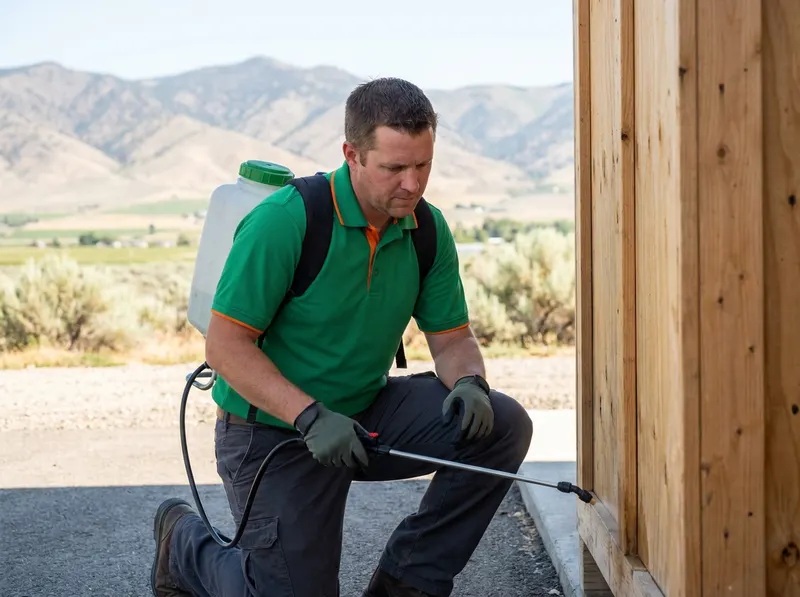
Commercial pest control services maintain regulatory sanitation standards and structural integrity for retail facilities, packing sheds, hospitality lodging, and administrative offices across Lemhi County. Inspections target high-risk food storage areas, commercial waste bins, mechanical boiler rooms, and loading bays along the Main Street business corridor. Customized Integrated Pest Management (IPM) protocols prioritize preventative structural proofing, non-chemical insect monitors, and mechanical traps to establish zero-tolerance pest thresholds. Detailed compliance logs, electronic device tracking, and discrete off-hours application schedules prevent business disruption while meeting state and municipal public health codes. Monthly reporting tracks insect capture counts per square foot, providing commercial property operators with audit-ready documentation showing compliance with state sanitation criteria and preventing inventory loss in grain or dry-goods warehouses.
Get a quote →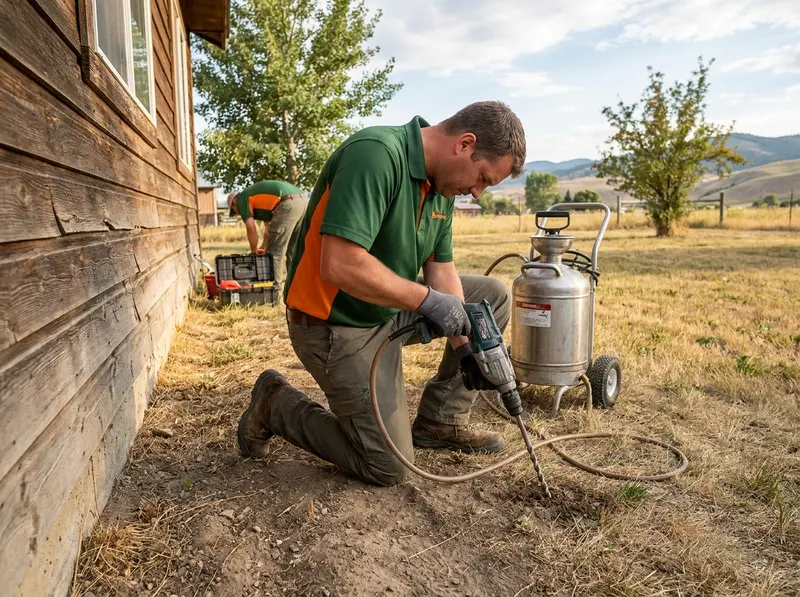
Termite control services address subterranean and dampwood termite colonies that compromise structural timbers in older buildings and river-bottom properties. Field technicians perform thorough crawl space inspections, mapping soil-to-wood contact points, shelter tubes, and localized timber moisture levels above 20 percent. Treatment methods utilize non-repellent liquid termiticides introduced through targeted soil trenching and sub-slab foundation injection around the structure footprint. When dealing with historic timber frames, localized low-pressure borate wood infusions penetrate the structural cellulose, creating an unpalatable barrier that halts ongoing wood consumption and prevents reproductive swarmers from establishing satellite nests. Continuous monitoring stations placed at 10- to 15-foot intervals around building perimeters detect subterranean worker activity before structural timbers suffer irreversible load-bearing damage.
Get a quote →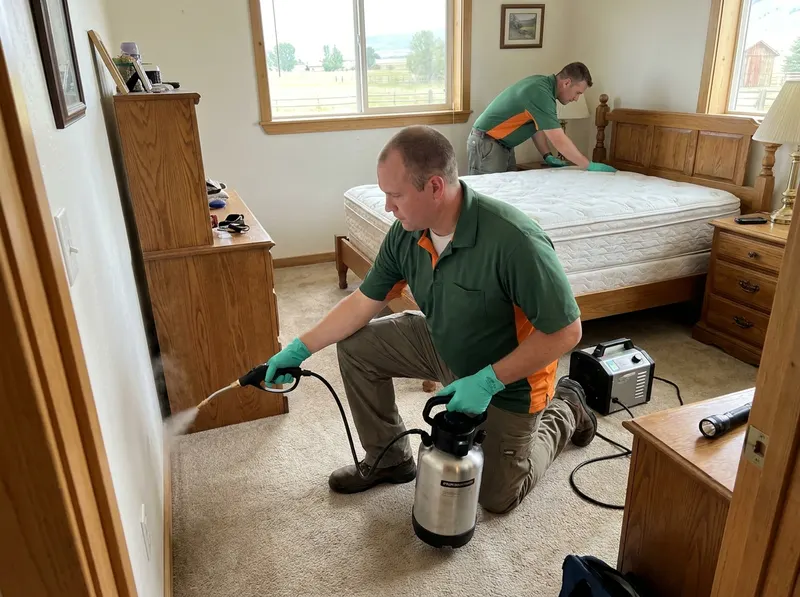
Bed bug control services eliminate persistent Cimex lectularius populations from residential homes, guest cabins, and regional lodging facilities using an integrated knockdown protocol. Every crack, mattress seam, headboard junction, baseboard void, and electrical wall plate receives direct physical and chemical inspection. Technicians employ high-heat steam delivery reaching 180 degrees Fahrenheit on sensitive textile surfaces to instantly denature bed bug eggs and nymphs on contact. This thermal application is paired with long-residual insect growth regulators (IGRs) and desiccant dusts applied inside hollow wall cavities, ensuring that newly hatched or migrating bed bugs encounter lethal mechanical barriers over a 30-day monitoring window. Follow-up visits at 14 and 28 days verify population eradication via precision monitoring traps positioned under bed posts and adjoining furniture legs.
Get a quote →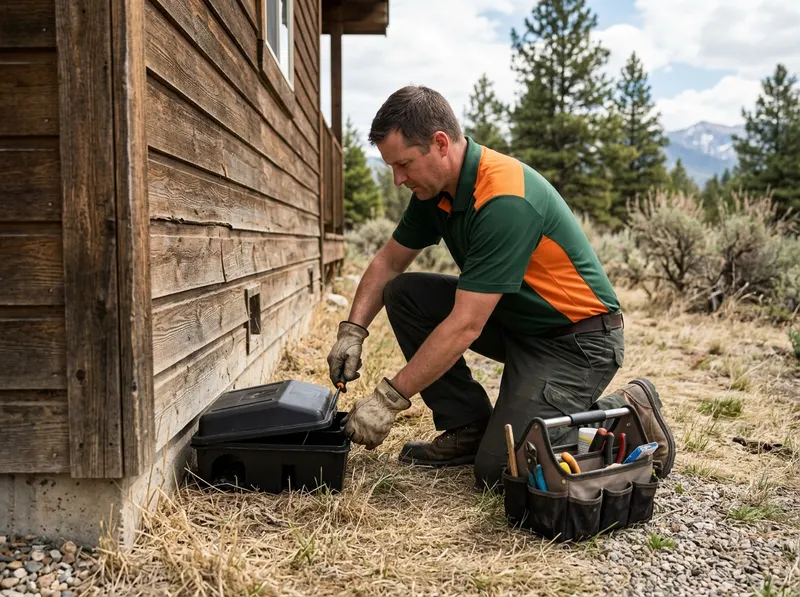
Rodent control services resolve deer mouse, house mouse, Norway rat, and bushy-tailed woodrat intrusions common to high-desert river valleys. The primary tactical phase involves mechanical exclusion: sealing foundation gaps, roofline junctures, and pipe clearances exceeding one-quarter inch using 16-gauge galvanized steel mesh, exterior-grade copper mesh, and heavy-duty elastomeric sealants. Inside attics, subfloors, and attached outbuildings, technicians deploy tamper-resistant mechanical snap traps and monitored capture stations without scattered interior poisons that cause hidden animal decay. Sanitation of contaminated droppings reduces hantavirus risks, restoring clean crawl spaces across rural Salmon parcels. High-density bait stations installed along stone outcroppings and firewood stacks establish secondary intercept lines that thin exterior rodent pressure before autumn temperatures trigger structure-seeking behavior.
Get a quote →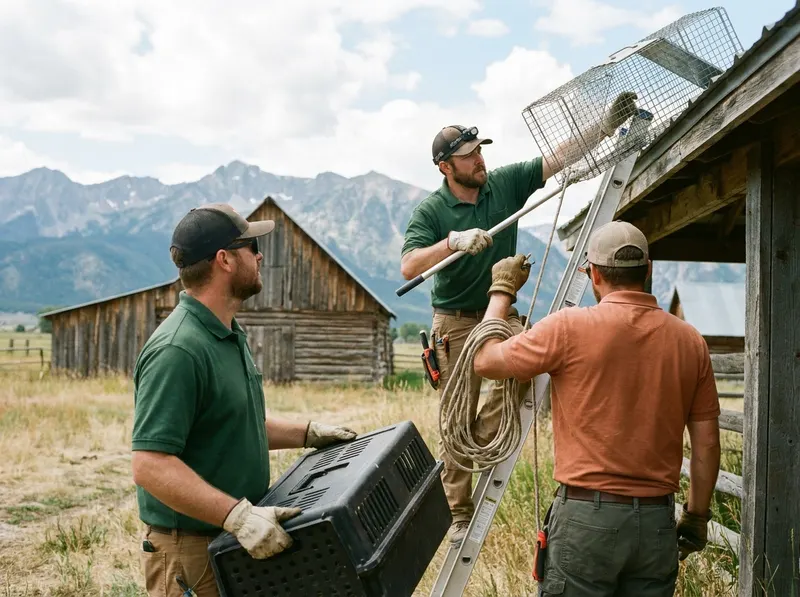
Wildlife removal services target nuisance vertebrate animals, including raccoons, striped skunks, rock squirrels, and bats, that exploit structural attics, subfloor voids, and barn lofts. Humane, species-specific live cage trapping systems comply with Idaho Department of Fish and Game regulations, utilizing targeted bait matrices away from domestic pets. For maternal bat roosts inside roof eaves or false chimneys, technicians install one-way exclusion cones outside designated summer restriction windows, allowing bats to exit at dusk without re-entering the building envelope. Following physical animal eviction, entry apertures are permanently reinforced with heavy wire hardware cloth, and fouled insulation materials are sanitized. Animal entry points around deteriorated facia boards, gable louvers, and crawl space vents are physically sheeted with heavy steel flashing to prevent persistent animal re-entry.
Get a quote →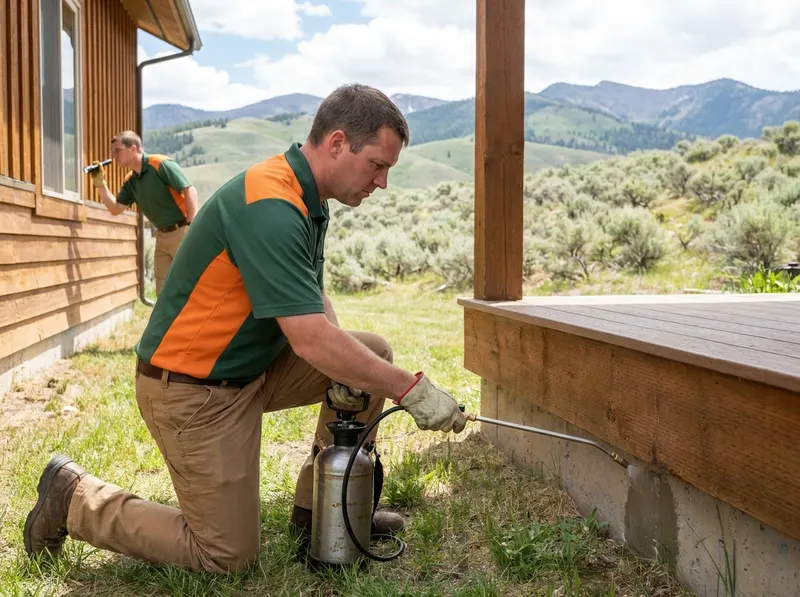
Ant control services eliminate carpenter ants, pavement ants, and odorous house ants foraging within interior kitchens or nesting inside wall voids. Carpenter ant management begins with acoustic and moisture detection to isolate primary exterior satellite nests located in damp landscape timbers, tree stumps, or moisture-damaged wall studs. Technicians deploy slow-acting non-repellent bait chemistry formulated with protein or carbohydrate attractants depending on seasonal nutritional requirements. Foraging worker ants transfer active ingredients directly to the egg-laying queen within the deep colony gallery. Exterior perimeter ground treatments establish a multi-foot defensive band that prevents outdoor colonies from establishing interior foraging highways. Treating structural sill plates and exterior window frames stops exploratory scouts from depositing pheromone trails leading into pantry areas.
Get a quote →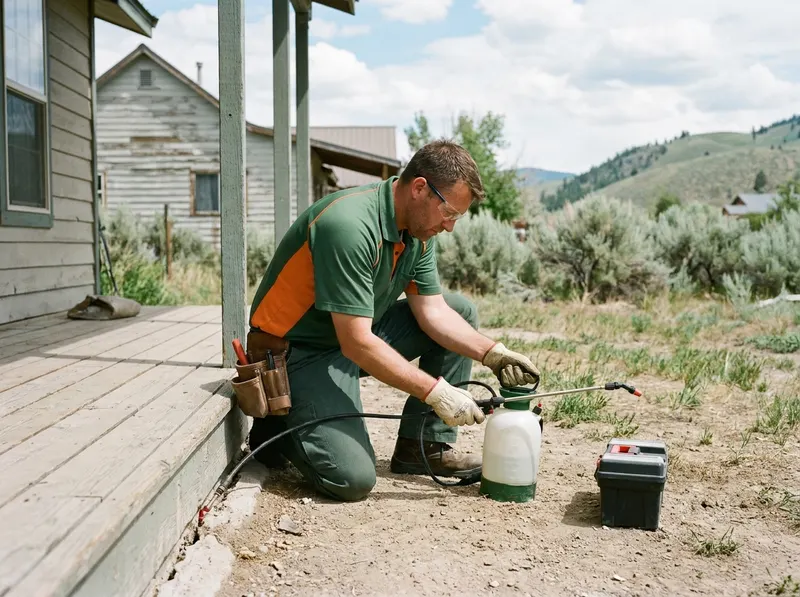
Cockroach control services resolve infestations of German, Oriental, and American cockroaches within domestic kitchens, commercial restaurants, and multi-unit residential structures. Management focuses on disrupting the reproductive cycle by injecting targeted gel baits, insect growth regulators, and amorphous silica gel into structural cracks, underside appliance panels, and plumbing chases. German cockroach nymphs and adults feed on residual bait matrices, while growth regulators halt juvenile molting cycles to break multi-generational population surges. Pheromone sticky monitoring boards verify population declines over structured 14-day intervals until complete eradication is documented. Floor drain cleaning and micro-foaming agents eliminate decomposing grease layers inside commercial kitchens where Oriental roaches breed, cutting off subterranean food reserves.
Get a quote →You get a firm, itemized quote for your pest control services before any work begins, no surprises, no pressure.
Careful prep, tidy work, and a full cleanup when we are done. We treat your home and belongings like our own.
The same trusted, background-checked team from the first call to the final check.
If a structure has active indoor pest sightings, choose targeted interior baiting combined with mechanical exclusion of foundation gaps; if the property faces regular seasonal influxes from surrounding rangeland, choose a 6-foot continuous exterior perimeter barrier. The trade-off is interior disruption and higher initial setup labor versus an exterior-only treatment that prevents future migrations but does not instantly clear existing attic or crawl space nesting sites. For wood-framed buildings and older log cabins, structural drilling and localized termiticide injection fit established wood-boring insect infestations, whereas broad-spectrum topical sprays fit surface-crawling spiders and ants; the trade-off centers on upfront drilling footprint versus topical wash-off from harsh Salmon Valley winter freeze-thaw cycles.
Choosing seasonal recurring services stabilizes perimeter defenses across all four high-desert quarters, while one-time corrective cleanouts fit immediate tenancy turnovers or post-construction builds at the expense of long-term residual deterrence against rodent re-entry. When evaluating property size, an exterior perimeter barrier of 1,500 to 2,500 square feet delivers complete foundation coverage using approximately 3 to 5 gallons of micro-encapsulated liquid, whereas expansive agricultural compounds exceeding 5,000 square feet require zoned baiting stations spaced every 40 to 50 linear feet along exterior outbuilding walls. If non-chemical environmental safety near riparian water tables is paramount, choose physical mesh screening and mechanical snap-trap runs; if immediate colony knockdown inside inaccessible wall cavities is required, choose targeted chemical voids and desiccant dust injection.
The operational trade-off balancing structural durability against upfront cost dictates that long-term mechanical rat-proofing and vent wire retrofits cost more during the initial visit but eliminate recurring monthly extermination callouts across cold mountain winters.
Every project gets a firm, written price after a free on-site visit. Ranges below for orientation.
Tell us about your pest control services job and we'll send a clear, written quote, usually the same day. Or just call and talk to a real Salmon pro.
(208) 742-0064
The dramatic elevation changes and extreme temperature fluctuations of the Salmon River Valley create distinct seasonal pest movements across Lemhi County. In spring, melting mountain runoff forces subterranean pests, carpenter ants, and dampwood termites out of saturated riverbank gravels into structural foundations near Island Park, Brooklyn, and the lower Salmon River corridor. As summer progresses, hot and arid conditions push rattlesnakes, yellow jackets, and black widows into shaded irrigated lawns, crawl spaces, and residential outbuildings along Highway 93 North toward Carmen and Shoup. By late autumn, rapid sub-zero cold snaps drive deer mice, voles, and bushy-tailed pack rats down from the high-desert Salmon-Challis National Forest foothills toward heated basements on Courthouse Hill and agricultural structures in Baker, Tendoy, and the greater Lemhi Hole. Managing these transitions requires rugged exterior barriers that withstand bitter winter frosts without chemical breakdown, coupled with heavy galvanized steel exclusion work that seals log joints, rim joists, and foundation footings against persistent rodent entry.
Free estimates for Salmon & the surrounding area.
 Ravexio Pest Defense