Commercial pest control targets the operational liabilities that occur when seasonal pests breach building envelopes along Highway 93 and Highway 28. Older commercial foundations along Downtown Salmon and Courthouse…
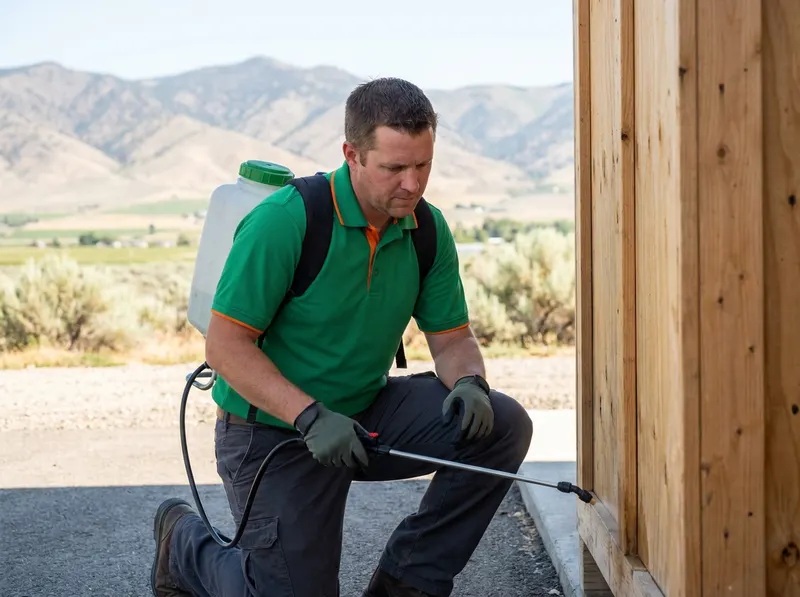
Commercial pest control targets the operational liabilities that occur when seasonal pests breach building envelopes along Highway 93 and Highway 28. Older commercial foundations along Downtown Salmon and Courthouse Hill frequently settle, opening quarter-inch gaps along sill plates and service conduits. Field mice (Peromyscus maniculatus) and bushy-tailed woodrats navigate these gaps during autumn temperature drops, nesting in ceiling insulation and chewing through wiring harnesses. Outlying facilities in Baker, Tendoy, and Carmen require targeted barrier zones that account for nearby agricultural crop cycles and riverfront moisture from the Salmon River corridor. A proper commercial protocol relies on exterior perimeter hardening rather than simple baseboard chemical applications, using heavy-gauge metal flashing and copper mesh around pipe penetrations to shut down entry points.
Selecting a commercial pest management agreement requires balancing upfront mechanical repair against routine chemical maintenance. A facility implementing strict physical exclusion stops pests before they enter product storage bays, minimizing the volume of synthetic formulations deployed inside working commercial areas. In contrast, relying strictly on internal pesticide traps requires frequent secondary clearing and exposes interior facilities to insect contamination during mountain weather shifts. For supply warehouses, packing sheds, and equipment shops near the Salmon-Challis National Forest Headquarters or retail spaces in Brooklyn, mechanical exclusion paired with monitored exterior perimeter baiting protects long-term structural integrity while satisfying commercial health and storage standards.
Operational workflows depend on clear property parameters. 1. Structural evaluation: A technician maps exterior doors, utility runs, crawlspaces, and outdoor refuse containers to pinpoint harborage zones. 2. Barrier implementation: Technicians apply non-repellent exterior perimeter barriers 3 feet up the foundation wall and 5 feet out across gravel or soil perimeters to interrupt crawling insect travel. 3. Station deployment: Weighted, lockable exterior bait stations are positioned along exterior runways, keeping baits secure from non-target wildlife and high winds. 4. Exclusion seal: Gaps larger than one-quarter inch are mechanically sealed with steel mesh and structural sealants to prevent sub-zero winter rodent access.
Every job gets a firm, written price after a free on-site visit.
Tell us about your commercial pest control job in Salmon and we'll send a clear, written quote, usually the same day.
 Ravexio Pest Defense