Properties bordered by the Salmon River corridor, public grazing allotments, and the Salmon-Challis National Forest regularly encounter native wildlife seeking winter harborage or maternal nesting sites. Striped skunks…
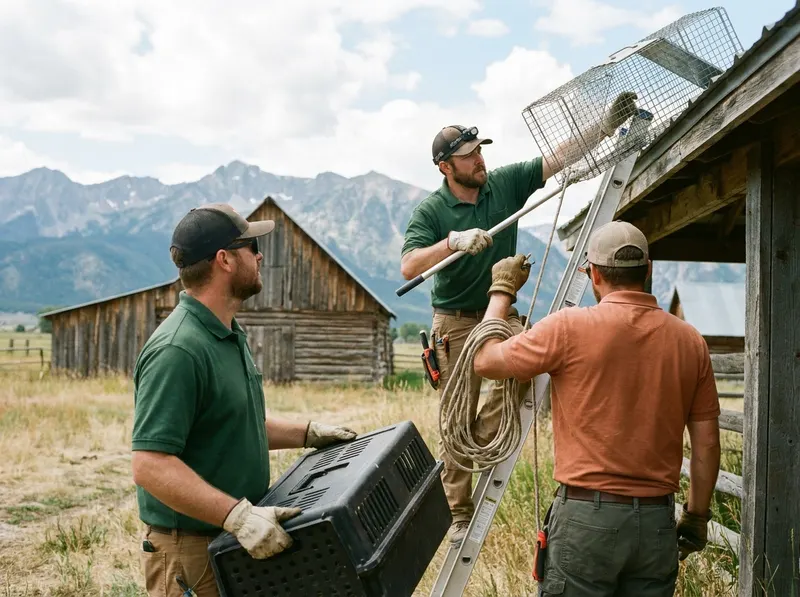
Properties bordered by the Salmon River corridor, public grazing allotments, and the Salmon-Challis National Forest regularly encounter native wildlife seeking winter harborage or maternal nesting sites. Striped skunks and yellow-bellied marmots frequently burrow beneath concrete slab foundations, low porches, and outbuildings in Brooklyn, Baker, and Carmen. In elevated timber pockets near Shoup or Courthouse Hill, northern flicker woodpeckers, red squirrels, and little brown bats often target fascia boards, roof soffits, and unsealed gable vents. Managing these species in high-desert and river-valley environments requires structural fortification rather than chemical deterrence, ensuring wild populations stay separated from livestock feed and domestic living quarters.
Effective intervention follows a clear 3-step physical containment process. First, technicians inspect rooflines, rim joists, crawl space vents, and perimeter footings to map all active entry points and secondary vulnerabilities. Second, gravity-activated capture cages or directional one-way exit doors are installed directly over primary thoroughfares, allowing animals to leave safely while blocking re-entry. Third, technicians seal all structural breach points using galvanized hardware cloth, custom sheet-metal flashing, and heavy-gauge fasteners that resist gnawing and clawing.
Choosing between simple live trapping and complete structural exclusion depends entirely on property integrity. Standalone live trapping removes the single animal currently occupying a porch, but leaves the void open for secondary migrants within weeks. Complete exclusion costs more upfront due to custom metalwork and carpentry, yet it permanently fortifies the building envelope against recurring seasonal invasions. For older agricultural properties in Tendoy and Lemhi Hole, pairing targeted removal with galvanized apron barriers along foundation margins delivers long-term durability against persistent diggers.
Every job gets a firm, written price after a free on-site visit.
Tell us about your wildlife removal job in Salmon and we'll send a clear, written quote, usually the same day.
 Ravexio Pest Defense