Stinging insect pressure accelerates along the Salmon River corridor from mid-summer through early autumn. As natural food resources diminish in late August, aerial bald-faced hornets and ground-nesting western…
Stinging insect pressure accelerates along the Salmon River corridor from mid-summer through early autumn. As natural food resources diminish in late August, aerial bald-faced hornets and ground-nesting western yellowjackets expand their defensive zones near residential patios, riverfront guest cabins, and working barns. In mountain topography ranging from the valley floor near Island Park to exposed hillside properties along Courthouse Hill and Brooklyn, stinging insects exploit structural gaps, nesting under cedar facia, behind metal siding, and within loose river rock foundations. In agricultural zones like Baker and Carmen, dry irrigation ditches and hay storage attract yellowjacket queens seeking rodent burrows for underground colonies that can house over 4,000 workers by September.
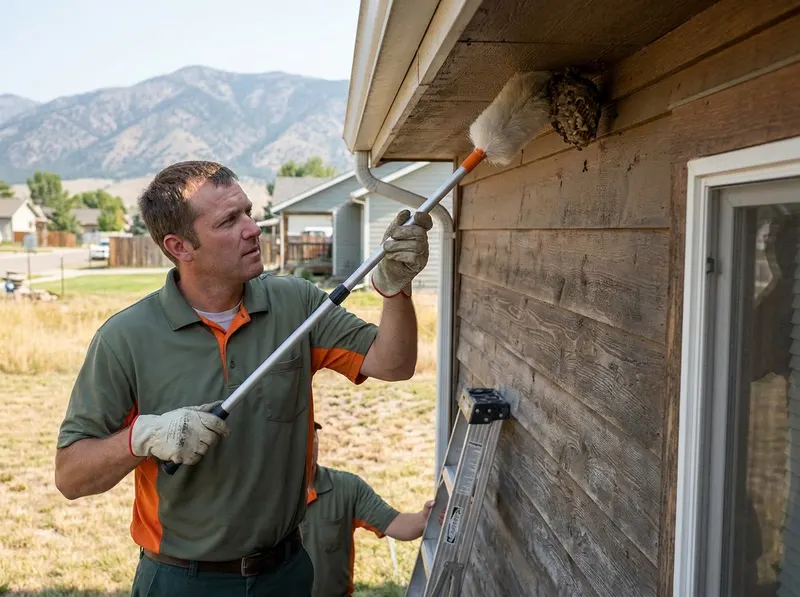
Stinging insect control differs fundamentally from general perimeter maintenance. Surface residual sprays applied for crawling insects do not neutralize established stinging colonies nested behind exterior sheathing. Eradication requires targeted applications using specialized equipment. For subterranean nests common in the high-desert gravel of Tendoy and Lemhi Hole, technicians apply pyrethroid dust formulations injected directly into the primary entrance tunnel under low pressure, penetrating deep into the subterranean brood comb. For aerial paper wasp and hornet colonies on two-story peaks near the Salmon Valley Golf Course or log cabins upriver toward Shoup, direct chemical knockdowns eliminate sentry wasps instantly, followed by complete physical removal of the cellulose paper nest to strip pheromone trails that attract future queens.
Selecting the proper treatment protocol depends on nest concealment. When a nest hangs exposed beneath an open deck or shed rafter, a direct freeze knockdown and mechanical scraping provide immediate relief without structural disruption. Conversely, when yellowjackets enter behind siding boards near soffit vents, exterior treatments must penetrate the wall void without driving worker wasps inward toward living quarters. The trade-off between exterior dusting and full interior wall void access involves balancing preservation of original building materials against immediate nest access. Standard treatment procedures ensure exterior access points are sealed only after complete colony collapse, preventing trapped insects from chewing through drywall into residential spaces.
Every job gets a firm, written price after a free on-site visit.
Tell us about your stinging insect control job in Salmon and we'll send a clear, written quote, usually the same day.
 Ravexio Pest Defense